If you’re building a new custom home, chances are someone has mentioned a “blower door test” to you.
Maybe your builder brought it up. Maybe you saw it referenced in a Focus on Energy certification packet. Maybe you’re a builder that has thought about conducting these on new custom homes in Northern Wisconsin, but you have yet to pull the trigger.
No matter what, it’s worth understanding what this test actually does and why it matters for a new house build.
What Is a Blower Door Test?
A blower door test measures how airtight your home actually is. And the process is straightforward!
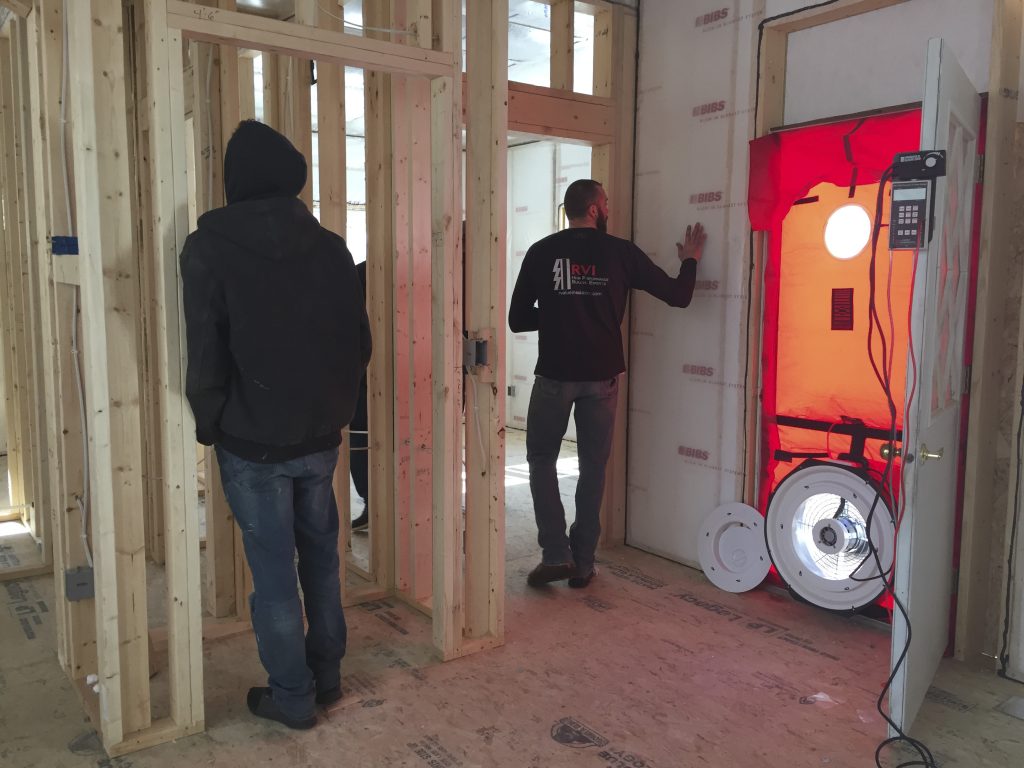
- A powerful fan is temporarily mounted in an exterior doorway.
- That fan pulls air out of the house, which drops the indoor air pressure.
- As the pressure drops, outside air gets pulled in through every gap, crack, and unsealed seam in the home.
- Once that happens, technicians can measure exactly how much air is leaking in, and often pinpoint exactly where.
The result is a number, usually expressed in air changes per hour (ACH), that tells you how tight your home’s building envelope really is. Lower numbers mean a tighter home, and as we know, tighter homes perform better.
Focus on Energy’s new home certification program requires independent testing and inspection to confirm a home meets strict energy performance standards. A blower door test is a core part of that verification process. Builders who commit to this level of testing are proving their work, not just promising it.
Why Do You Need a Blower Door Test?
A blower door test is one of the only ways to actually verify that a home’s air sealing was done correctly.
You can insulate a home perfectly and still end up with a house that leaks air like a corn crib if the sealing details weren’t handled with care. Air sealing and insulation work together. One without the other leaves performance on the table.
Air leakage alone can increase heating and cooling costs by more than 30%, according to Focus on Energy. That single stat is why air sealing verification isn’t optional if you care about performance.
Here’s what a proper blower door test result tells you:
- Whether your home’s air sealing meets code, or exceeds it
- Where the biggest leaks are hiding, often in places you’d never think to check
- Whether your home is on track for a Focus on Energy new home certification
- How much your heating and cooling system will need to work to keep up
For new construction, this test is best run before drywall goes up, so any issues can still be fixed. Testing again once the home is finished gives you a final, verified number.
How to Prepare for a Blower Door Test
f a blower door test is scheduled on your project, a few simple steps help ensure accurate results.
- Close all exterior windows and doors
- Open interior doors throughout the home
- Turn down thermostats on heaters and water heaters
- Cover ashes in wood stoves or fireplaces with damp newspaper
- Shut fireplace dampers, fireplace doors, and wood stove air intakes
These steps create a consistent baseline so the test accurately reflects the home’s true air tightness, not temporary conditions. Source: Focus on Energy
A Blower Door Test is Not Just About Air Leaks
A full home performance assessment takes your blower door test even further. Two other tests are frequently paired with it:
Combustion safety testing checks whether appliances like furnaces, water heaters, and fireplaces are venting combustion gas properly. This matters because a tightly sealed home can sometimes create pressure changes that pull combustion byproducts, including carbon monoxide, back into the house instead of outside where they belong. This test makes sure that doesn’t happen.
Thermography, or infrared camera testing, is sometimes used to visually confirm where heat loss and air leaks are occurring. It can also verify that insulation was installed correctly throughout the home, not just in the areas that were easy to reach.
Together, these tests paint a complete picture of how a home is actually performing, not just how it looks on paper. Source: Focus on Energy
Watch Us Test Our Own Build!
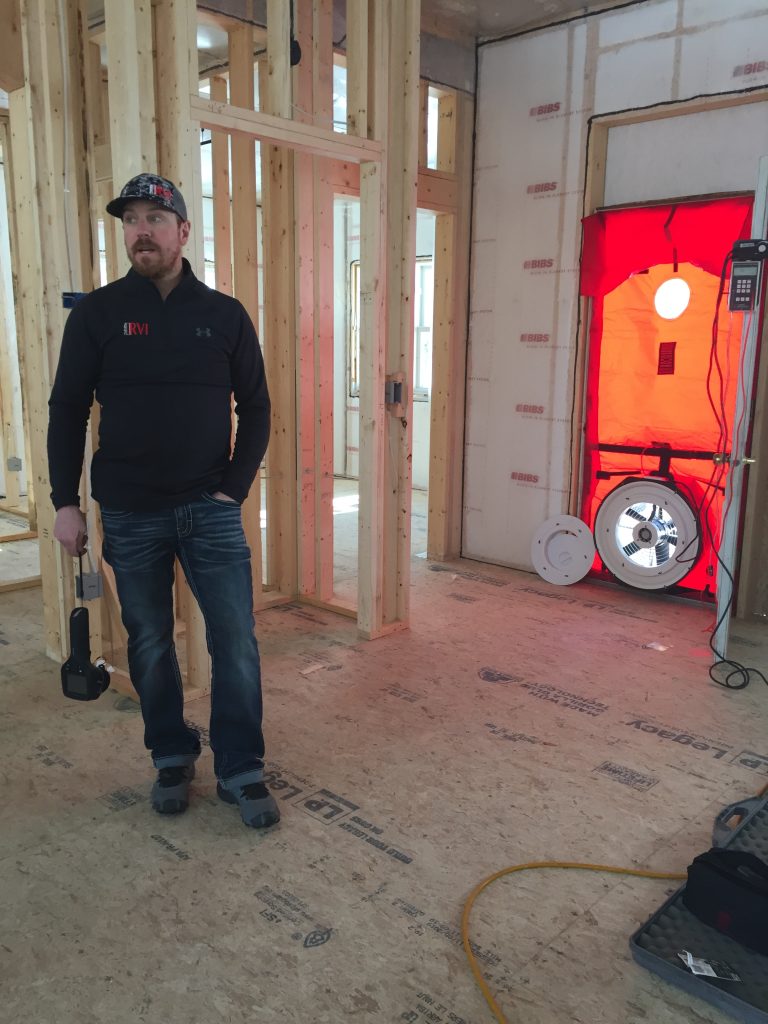
Sam and Ashly are in the middle of building their own custom home in Northern Wisconsin this year. Later this fall, we’ll be running a blower door test on that build, and we’ll be documenting the process with photos and video. If you want to see exactly what this testing looks like on a real project, keep an eye on our social media account or join our email newsletter list.
If you’re building homes in Northern Wisconsin and you’re not testing for air tightness, you’re building on assumptions instead of proof. Testing simply provides proof that you did the job right.
A blower door test gives you documentation that your work performs the way you say it does. That’s a stronger selling point than any brochure, and it protects you if questions ever come up down the road!
Ready to talk about air sealing verification for your next project? Get in touch with RVI. We’re happy to walk you through what testing looks like and how it fits into your build schedule.