The first real cold snap hits. You pour your coffee, open the blinds, and there it is. Water running down the glass. Puddles on the sill. Maybe even a sheet of ice on the inside of the window.
If that sounds familiar, you’re not alone. Wet winter windows is one of the most common questions we get at RVI. So let’s talk about what’s actually happening, and what you can do about it.
What Causes Wet Windows in Winter?
It comes down to two things: moisture in the air and a cold surface.
Warm indoor air holds moisture. When that air touches something cold, like window glass on a -15°F January morning, it cools down and can’t hold as much water. That extra moisture has to go somewhere, so it settles on the glass as condensation. If the glass is cold enough, it freezes.
It’s the same thing that happens to a cold can of pop on a summer day. Your window is the can.
Your windows are usually the coldest surface in your home, so they show the problem first. Think of them as an early warning system.
Where Does All That Moisture Come From?
More places than you’d think. A typical family adds a lot of water to indoor air every day just by living. Common sources:
- Showers and baths
- Cooking, especially boiling water without a vented range hood
- Drying laundry inside
- Humidifiers
- Houseplants
- Firewood stored indoors
- People and pets breathing
New homes can have extra moisture their first winter or two as building materials dry out.
Why Is It Worse Now Than It Used to Be?
Older, drafty homes let moisture leak out with all that heated air you were paying for. Today’s homes are built much tighter, which is a good thing. Tighter homes are more comfortable and cost less to heat.
But a tight home needs a plan for moisture. In building science, we say it simply: build tight, ventilate right. If the air and moisture don’t have a controlled way out, they’ll find the coldest spot in the house. Usually that’s your windows.
Is Window Condensation a Big Deal?
A little fog at the bottom of the glass on the coldest mornings? Not usually a crisis. But ongoing water and ice can lead to:
- Mold and mildew on sills and trim
- Peeling paint and stained drywall
- Rotting window frames and sills
- Moisture moving into walls and attics, where you can’t see it
That last one matters most. If your windows are wet, there’s a good chance the extra moisture is showing up in other places too.
Tips from the Top: 6 Ways to Cut Down on Wet Windows
- Run your bath fan longer. Turn it on when you shower and let it run 60 minutes after. Make sure it actually vents outside, not into the attic.
- Use your range hood. Cook with the lid on and run the hood every time. Recirculating hoods don’t remove moisture.
- Get a hygrometer. It’s an inexpensive gauge that tells you your indoor humidity. You can’t manage what you don’t measure.
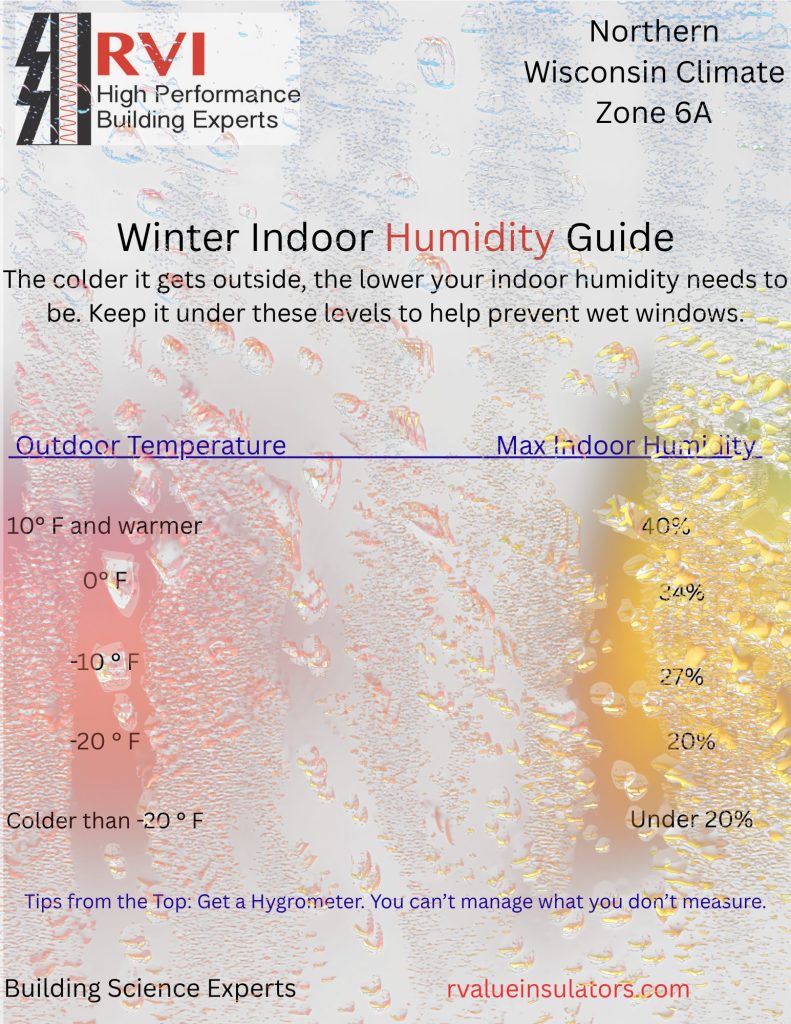
- Lower humidity as the temperature drops. The colder it gets outside, the lower your indoor humidity needs to be. A general guide: around 34% at 0°F outside, and closer to 20% on those -20°F nights.
- Let the air reach the glass. Heavy curtains and closed blinds trap cold air against the window. Open them during the day so warm air can circulate. A ceiling fan on low helps too.
- Look at ventilation. In a tight home, a mechanical ventilation system like an ERV can bring in fresh air and moves stale, moist air out.
What If the Water Is Between the Panes?
That’s a different problem. Fog or moisture between the two panes of glass means the seal on the window has failed. Lowering your humidity won’t fix it. The glass unit needs to be repaired or replaced.
What If Only One Window Is Bad?
If one window frosts or sweats much worse than the others, cold air may be leaking in around the frame. That cold air chills the glass and frame even more.
The Bottom Line
Building a new home? Ask your builder how they’re planning for moisture and ventilation from day one. Remember, attic ventilation is very different than whole house ventilation. Getting it right before the walls close is the best way to keep your windows dry for years to come. Give us a call at (715) 420-0177. We’re always happy to talk building science.