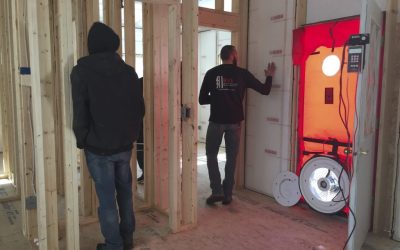
We work with builders across Northern Wisconsin, so it makes sense that most of our conversations focus on new construction. New-build insulation is important for homeowners who care about comfort, durability, indoor air quality and energy efficiency.
Existing homes carry their own set of problems. In many cases, these problems are worse! Small issues have festered in walls and attics for years – sometimes decades – affecting comfort, durability, indoor air quality and energy efficiency.
In our experience, Northern Wisconsin’s temperature extremes compound this problem. It’s easy to think insulation problems are a cold-weather concern, but that is only half the story. Summer heat and humidity reveal these issues just as much as winter cold does.
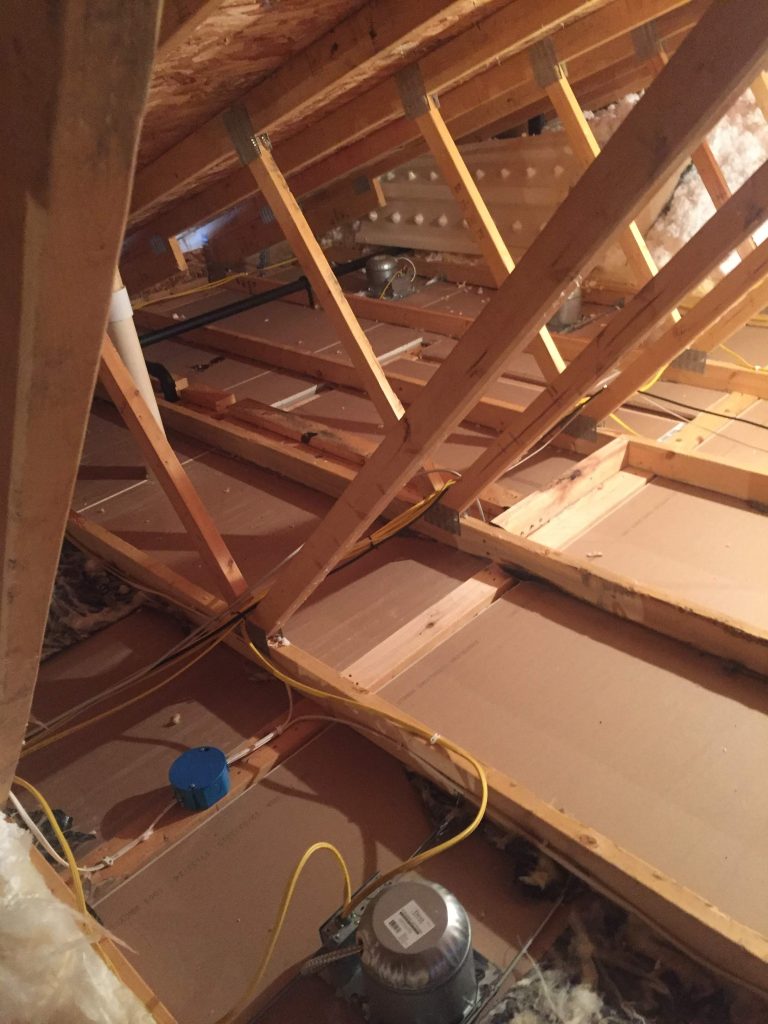
Existing Homes Were Built for a Different Era
Homes built 40 or 50 years ago were built with different materials, techniques, and expectations. Over time, new priorities have risen from consumer demand. Things like durability, indoor air quality and energy efficiency are expected today – we don’t just get to throw another log on the fire!
Building science, as we understand it today, existed in a very different context.
That gap creates a mismatch. A home built decades ago is now expected to meet today’s comfort and efficiency standards, but its bones were never designed for that. Insulation added later, without addressing the original construction, often makes assumptions that do not hold up.
That’s why so many older homes struggle. It’s not that they were built poorly for their time. It’s that their time has passed, and the home has not been updated to match.
Summer Insulation Issues
When people think about insulation issues, they usually picture cold drafts, ice dams, and high heating bills. Those are real problems, but they’re not the whole picture.
Heat and humidity create their own set of issues, especially in attics and wall cavities. An attic that gets too hot in summer can bake shingles from beneath, break down materials faster, and trap humidity with nowhere to go. Wall cavities without proper permeability can hold moisture long after a humid stretch has passed.
Ventilation of insulated spaces matters just as much in July as it does in January. If a home’s ventilation was never sized or planned correctly, insulation alone will not fix the underlying issue. In some cases, it can make it worse by trapping moisture in places that were not designed to be wet.
The Cycle of “Attempted Fixes”
We often see existing homes that rarely get fixed correctly the first time.
Let’s say a homeowner notices a cold room or a musty smell. They call an insulation company, which adds more insulation and call it done. But the underlying issue is still there. A few years later, the same problem shows up again – sometimes worse.
This cycle repeats because most fixes treat symptoms, not causes. Each attempt is a patch, not a solution. And patches stack up over time, creating a home with a long history of quick fixes rather than a single correct diagnosis.
Common Insulation Mistakes
When we walk into an existing home, a few patterns show up again and again.
- Attic ventilation that was poor to begin with, with insulation simply piled on top of the problem
- Wall cavities that were never properly air-sealed before insulation was installed
- New insulation was added without addressing existing airsealing issues
- Systems treated in isolation, instead of understanding how airflow, insulation, and moisture work together
Each of these mistakes, on its own, can cause real problems. Combined, they compound quickly. A home with poor attic ventilation and unsealed wall cavities will experience ongoing moisture and efficiency issues that will not go away with just another round of insulation.
What This Means for Your Home
If you’re having issues with your house, you need more than a quick fix. You need a thorough evaluation that looks at the whole system, including how air moves, where moisture collects, and how the original construction holds up against today’s standards.
Throwing more insulation at a problem without understanding the root cause rarely solves anything. It usually just delays the next issue.
If your home has been through a few rounds of “fixes” that never quite worked, it might be time for a different approach. At RVI, we evaluate the whole picture, not just the insulation. Contact our friendly team to talk about what is really going on in your home, and how to fix it correctly this time around!