Post-frame buildings are everywhere in Northern Wisconsin! From agricultural barns to commercial warehouses, and even residential homes. These structures offer cost-effective solutions for large spaces.
When it comes to insulation, post-frame buildings have little difference to conventional built structures.
At RVI, we regularly insulate these types of structures, including their attics and sidewalls. Let’s go over what it takes to insulate these structures, since proper insulation installation in post-frame buildings is crucial for durability, health and safety, and energy efficiency.
What Are Post-Frame Structures?
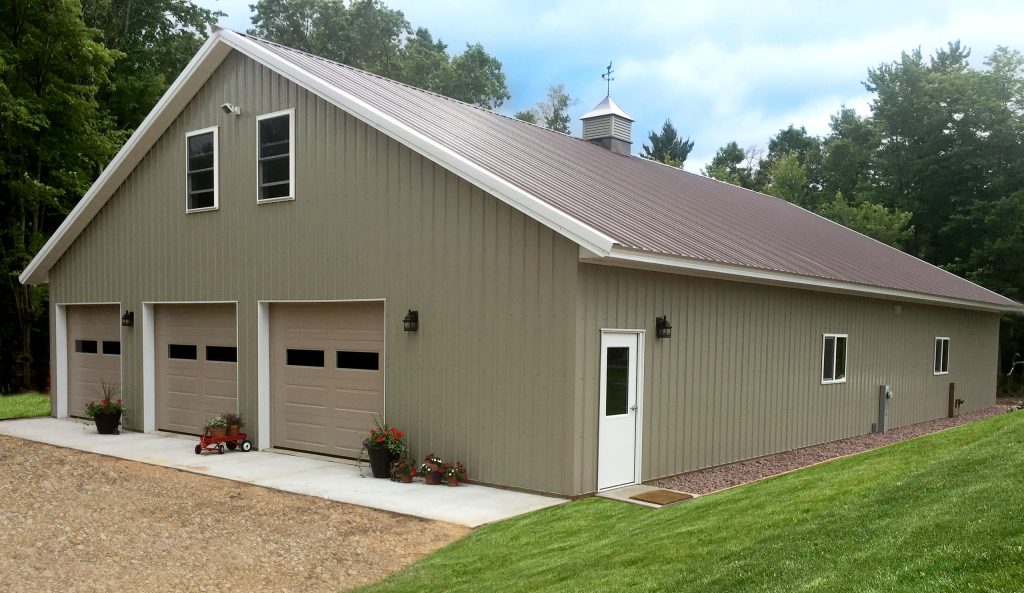
In Northern Wisconsin, a post-frame structure (also called a pole barn) is commonly used for agricultural purposes, garages, workshops, homes and commercial warehouses. These buildings tend to be cost-effective to build and feature large open spaces, ideal for storage. The biggest difference between a post framed building and conventional panel framed building is, typically, the framing members are larger and less frequent. Posts spaced anywhere from 4’ to up to 8’ or 9’ are common. Truss spacing is also usually larger, with the trusses built heaftier to support loads using less members. Gerts or purlins are used to reduce framing spans and to accommodate interior and exterior finishes.
How Post-Frame Building Insulation Is No Different
Like all buildings, success with insulation in a post frame building will require the right approach from the beginning. RVI will evaluate your project prior to building and help to determine a solution that is right for you.
Post-frame buildings require nothing different than most standard residential buildings. As with all buildings, properly insulated means properly framed. For a successful Blow-In-Blanket application framing components generally need to be spaced no greater than 2’ on center. It does not matter if the framing is vertical or horizontal, or inboard or outboard of the structure.
Attic Insulation in Post Frame Buildings
At RVI we live and work through the tough times! Success in the summer can be relatively easy. The winter in Northern Wisconsin is not. From slippery, snow covered roads to sub-zero temperatures, just trying to get around from November to April can be a job on its own. With all of the things that are out of our control to worry about, why should we have to worry about what we can control? Proper air sealing, venting, and insulation of your attic space in post-frame buildings is crucial. When the snow starts to pile up, unvented or underinsulated attics can turn into a problem quickly. Ice dams, condensation, and overall inefficiency can be a recipe for an even longer, more costly winter.
So get on your sled and ride!! When you get back you won’t even have to think about how well your RVI insulated building is performing.
Sidewall Insulation in Pole Barns
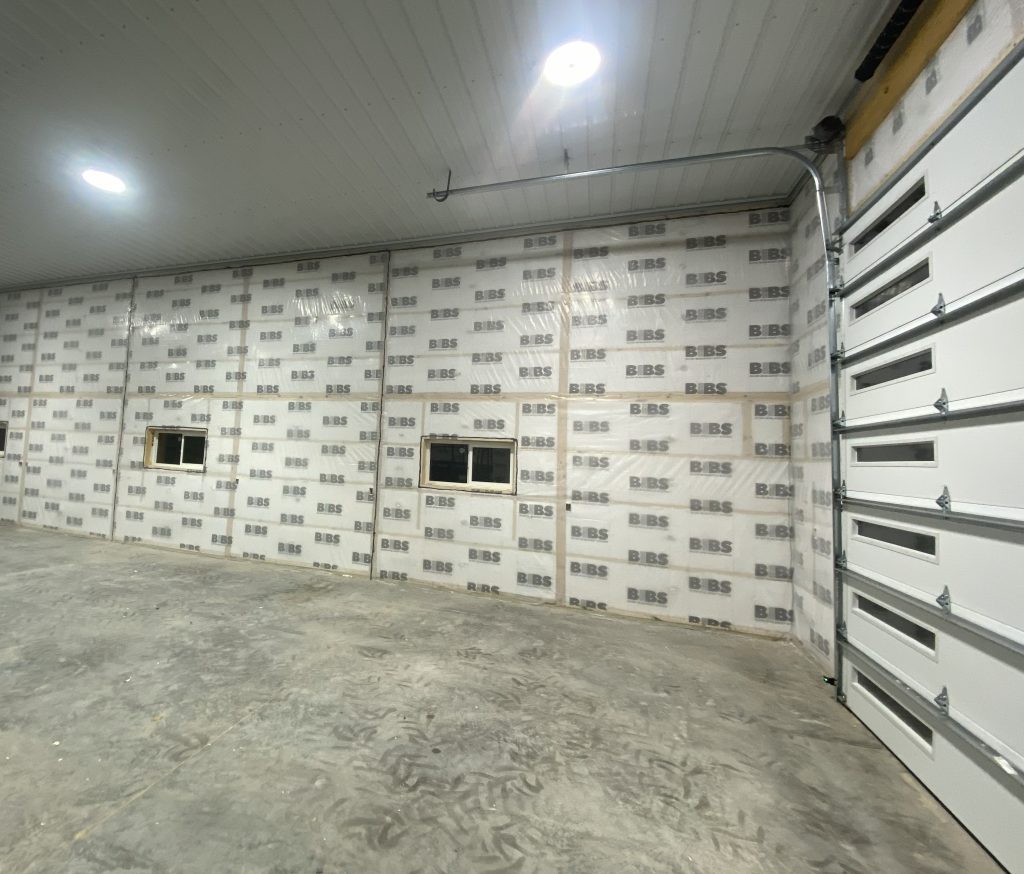
RVI’s Blow-in-Blanket insulation system is the preferred choice for cavity insulation. BIBS R-Values are 4.2 per inch, making it the highest performing insulation system on the market. BIBS fills all cavities completely. Even filling around all mechanical systems, hidden cavities and all of those odd shaped spaces. BIBS is also flexible and forgiving. In our climate we really do experience the extremes. From well-below-zero in the winter months to near 100 degrees in the summer, an awful lot is expected from insulation. This is where BIBS excels above all others.
As buildings expand and contract seasonally, BIBS, and the components that compliment BIBS freely move with the building. No loud bangs in the winter or annoying pings in the summer! There is no cracking, separating, settling or gapping– EVER. With an R-Value of 4.2 per inch, a 2×6 post frame wall can boast a total cavity R-Value of 23. Higher cavity R-Values are often attained due to the unique framing required in post frame buildings. No other insulation system can compare. And that’s just the insulation! RVI also offers interior air barriers that can meet any need. From 6 mil poly, to smart air barriers, to heavy mil reinforced wall finish products, we can accommodate any situation. All of our air barriers are sealed using Tremco brand mastics, which are non-skinning and non-hardening and maintain an excellent air seal for the life of the building.
As we touched on earlier, success with insulation requires an appropriate framing package. Post-frame structures generally have structural framing systems with cavities that are much larger than traditional stick framed buildings. Additional framing is required to reduce the cavity size, however, that framing is usually necessary to fasten interior and exterior wall finishes. Most often the interior or exterior finish will determine what framing will be necessary. RVI’s Blow-In-Blanket will work well with any framing layout.
Building Science Approach for Post-Frame Insulation Installation
At RVI, we rely on building science principles to develop an insulation strategy for all buildings. Post frame buildings are unique in that generally they are used for the storage of equipment and vehicles year round. They are a great space to dry out equipment, snowplows and winter toys; not to mention getting winter off of your vehicles from time to time. The last thing we want to see is moisture trapped in the building where it will wear on the building’s durability and no doubt reduce the life of all of the things you store inside. Proper building ventilation is critical, and we can help take care of that for you as well.
Partner with Building Science Experts
Post-frame buildings offer great value for large spaces, but they need proper insulation to perform well long-term! At RVI, we understand the unique challenges these structures present, and know exactly how to make post-frame buildings comfortable and energy-efficient.
Thank you for taking your time today to understand our perspective on Post Frame Construction. When you decide to build your forever home, a cabin, or a post-frame building for all of your hobbies, RVI will be on your team to help make your project what it should be.
Ready to discuss insulation options for your next post-frame project? Contact RVI for a quote, today!